Platelet-Rich Plasma (RPP) therapy harnesses a concentrated dose of your own platelets, cells rich in healing growth factors, to calm inflammation and accelerate tissue repair. For those struggling with disc tears, radiculitis, and injured or arthritic facet joints, PRP serves as a potent orthobiologic alternative to steroids and nerve ablations. By utilizing precise image guidance, we ensure every treatment is safe, accurate, and tailored to your specific recovery goals.
Diagnostic Process: We correlate clinical findings with advanced imaging to precisely identify the source of your pain. To confirm if the facet joints are the primary cause, diagnostic medial branch blocks are used to pinpoint the exact vertebral levels.
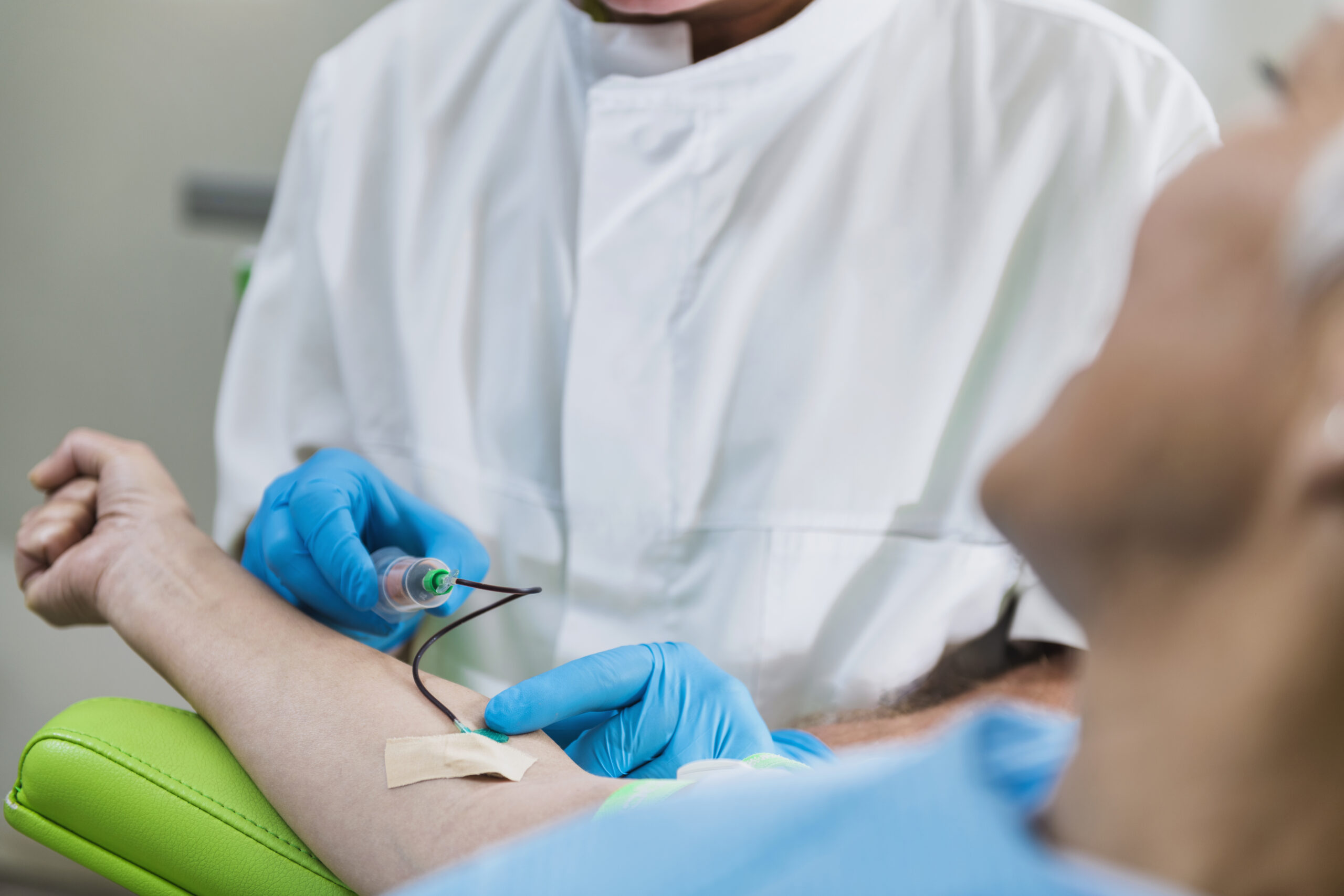
Harvest: We begin by drawing a small blood sample (usually 60-120 mL).
Processing: The blood is processed via sterile technique using two centrifugation cycles in an enclosed system, separating red blood cells to create a concentrated platelet, monocyte, and plasma suspension.
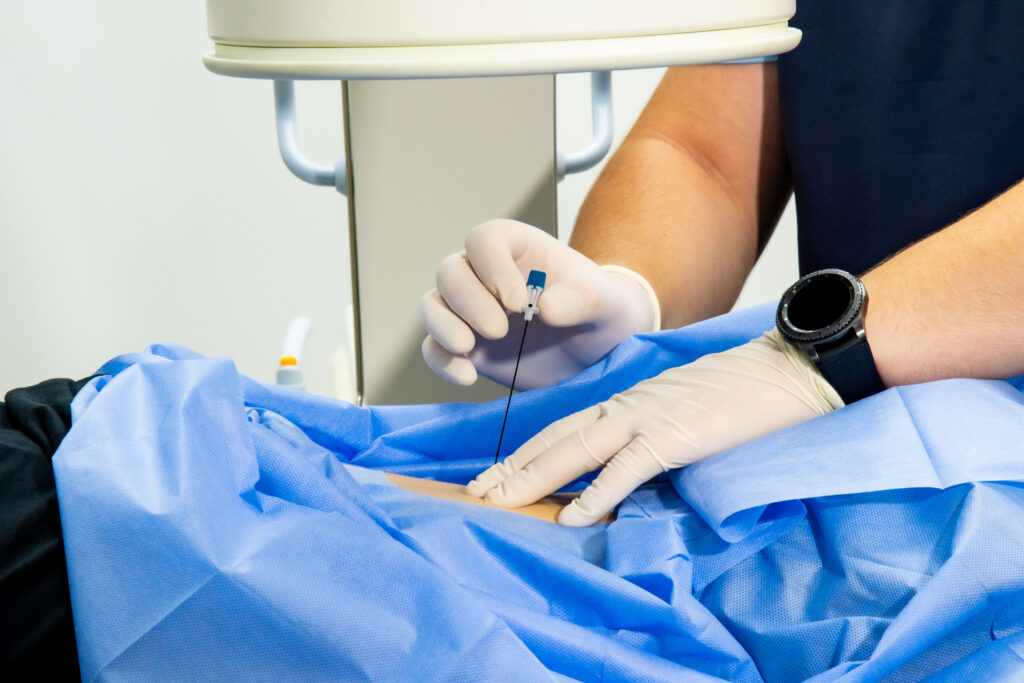
Image‑Guided Precision: We utilize image guidance for every injection to guarantee maximum precision and patient comfort.
Functional Unit: To address discogenic and radicular pain effectively, we treat the entire functional unit. By including the facet joints, spinal ligaments, and paraspinal muscles, we improve spinal stability and optimize clinical outcomes.
Prophylactic Antibiotics: When performing intradiscal PRP, we administer antibiotics to mitigate the risk of infection.
Persistent low back pain stemming from intervertebral disc injury, often characterized by a visualized annular tear or occurring post-discectomy. Patients typically report a debilitating, deep midline ache that intensifies with spinal flexion, lifting, or increased intra-abdominal pressure (e.g., coughing or sneezing).
Facet joint dysfunction occurs when the small stabilizing joints of the spine experience wear due to arthritis, inflammation, or capsular injuries. This condition usually manifests as a band-like ache in the lower back that worsens with standing, lifting, or extending and rotating the spine. It is also common for this pain to refer downward into the buttock area.
Facet joint dysfunction—wear in the small stabilizing joints of the spine—is often triggered by arthritis, inflammation, or whiplash. This condition typically causes neck pain that intensifies during head rotation or extension; while the pain may radiate to the shoulder, upper cervical dysfunction is also a primary driver of cervicogenic headaches.
Nerve pain caused by a pinched or inflamed nerve in the spine, typically due to a herniated or bulging disc, or narrowing of the nerve pathways (stenosis). Most people experience symptoms on only one side of the body—either radiating from the neck into the arm or from the lower back into the leg—and it can sometimes cause muscle weakness.
Characterized by band-like mid-back pain localized to the facet joints—the spine’s small stabilizing structures. Symptoms are typically exacerbated by spinal extension, consistent with facet arthropathy (osteoarthritis), inflammation, or capsular irritation.
Visit length
PRP spine procedures are performed in-office and usually completed within 60-90 minutes.
Post-Treatment Recovery
Activity Protocol
Results
Timeline
Improvements typically take 4–12 weeks to build and may continue to mature over several months. Responses vary by individual and disc condition.
Performed
With strict sterile technique and real‑time imaging.
Possible effects
Temporary pain flare, bruising, headache, or transient leg/arm symptoms.
Rare but important risks
Infection (discitis), bleeding, nerve irritation or injury, dural puncture/spinal headache, allergic reaction to prep/meds, or lack of symptom relief.
Contraindications
Not a fit if you have an active infection, uncontrolled bleeding risk/anticoagulation, severe spinal instability, large/sequestered herniation causing progressive neurologic deficit, or if your symptoms point to a non‑disc source.
Patient Medication Guide
We’ll review your history, imaging, and prior treatments to determine whether intradiscal PRP, or another option, best matches your diagnosis and goals.
What to know more about our evidence based approach? Explore the links below for more information.
Randomized control trial assessing the efficacy of platelet-rich plasma injections for lumbar discogenic pain.
This Level 1 randomized controlled trial (RCT) compares the efficacy of epidural platelet-rich plasma (PRP) versus epidural corticosteroids for patients with single-level disc herniation and radicular leg pain.
A retrospective study of intradiscal PRP concentrations and their effects on discogenic pain outcomes.
A systematic literature review evaluating the incidence and mitigation of infectious complications associated with intradiscal orthobiologic procedures.
Level 1 prospective RCT comparing the efficacy of epidural platelet-rich plasma (PRP) vs epidural corticosteroid in treating patients suffering from radicular pain due to lumbar disc herniation.
Level 3, prospective study compares the efficacy of bone marrow concentrate (BMC) targeting the functional spinal unit (facet and sacroiliac joints, and epidural space) vs conventional therapy in treating patients with chronic low back pain.
A prospective trial of intradiscal platelet-rich plasma (PRP) for the treatment of lumbar discogenic pain.
Schedule a consultation to explore non-surgical treatment options that align with your active lifestyle.