Cushion and Support
with MFAT.

MFAT uses a small sample of your own fat, rich in cushioning matrix and reparative cells, gently processed into a microfragmented graft. Injected under ultrasound guidance, MFAT acts as a bioactive scaffold that promotes the natural repair and restoration of ligaments, tendons, and joints.
MFAT asp cartoon
MFAT preparation

How it works.

Diagnostic Process: Align exam findings with diagnostic imaging to ensure an accurate diagnosis and characterization of your injury or arthritic joint.

Harvest: After numbing the area for your comfort, we take a small amount of fat (typically from the abdomen or flanks) through a mini–liposuction technique.

Processing: The tissue is mechanically microfragmented in a closed, sterile system (no enzymes) to preserve its natural matrix and cellular components.

Precision Placement: To ensure your comfort and the highest level of precision, we perform every injection using ultrasound guidance.

Common injuries and conditions we treat with MFAT.

Knee

Knee osteoarthritis and chondromalacia (affecting the tibiofemoral or patellofemoral joints), meniscus tears, damaged ligaments (MCL, LCL, and certain ACL/PCL injuries), injured tendons (patellar, quadriceps, and biceps femoris), and insertional IT band injuries.

Hip and Pelvis

Hip (femoroacetabular joint) osteoarthritis and chondromalacia, anterosuperior labral tears, sacroiliac joint dysfunction, and tendinopathy and incomplete tears of the gluteal, hamstring, hip flexor, and adductor tendons.

Shoulder

Genohumeral and AC joint osteoarthritis, posterior labral tears, and tendinopathy or incomplete tears of the rotator cuff and biceps tendons.

Ankle and Foot

Osteoarthritis affecting the ankle and foot joints (eg., tibiotalar, subtalar, and first metatarsal joints), tendinopathy and incomplete tears of the Achilles and ankle tendons, plantar fasciitis, and ligament injuries (ATFL, CFL, PTFL and Deltoid).

Hand and Wrist

Wrist and hand osteoarthritis, TFCC injuries, and tendinopathy and incomplete tears of the extensor and flexor tendons.

Elbow

Elbow osteoarthritis, incomplete UCL injuries, and tendinopathy or incomplete tears of the biceps, triceps, and common flexor or extensor tendons.

What to expect.

Visit length

MFAT procedures are performed in-office and usually completed within 90 minutes.

Post-Treatment Recovery

While you may experience temporary bruising or soreness at the harvest and injection sites for up to a week, our team will fully support your recovery with a personalized plan for physical therapy and a gradual, guided return to your favorite activities.

Activity Protocol

Protection, light activity, and range-of-motion exercises for the first 3–7 days. Progress through the rehab protocol, aiming for a full return to activities within 6–8 weeks.

Results

Most patients see significant improvement within 4–12 weeks, with progress continuing for up to 6-9 months. Results vary by condition and individual factors.

Safety

MFAT is a very safe treatment, using your own (autologous) fat tissue to promote healing. While most patients experience only mild, temporary side effects like bruising, swelling, or minor contour irregularities at the harvest site, rare risks such as infection, nerve or tendon injury, or increased pain can occur.

Medications

To maximize MFAT effectiveness, please discontinue all NSAIDs and statins prior to your procedure, following the specific timeline provided by your specialist.

Patient Medication Guide

Why choose MFAT with us?

  • Image-guided accuracy for every harvest and injection to insure your comfort and the highest level of precision.
  • A comprehensive plan that pairs biological treatment with a data-driven rehabilitation roadmap tailored to your specific diagnosis and goals.
  • Thoughtful patient selection and candid counseling to align outcome expectations. MFAT procedures are considered only after conservative care has been optimized, and as a strategic, minimally invasive alternative or bridge to surgery.
MFAT in syringes
USG MFAT injection
mountain biking
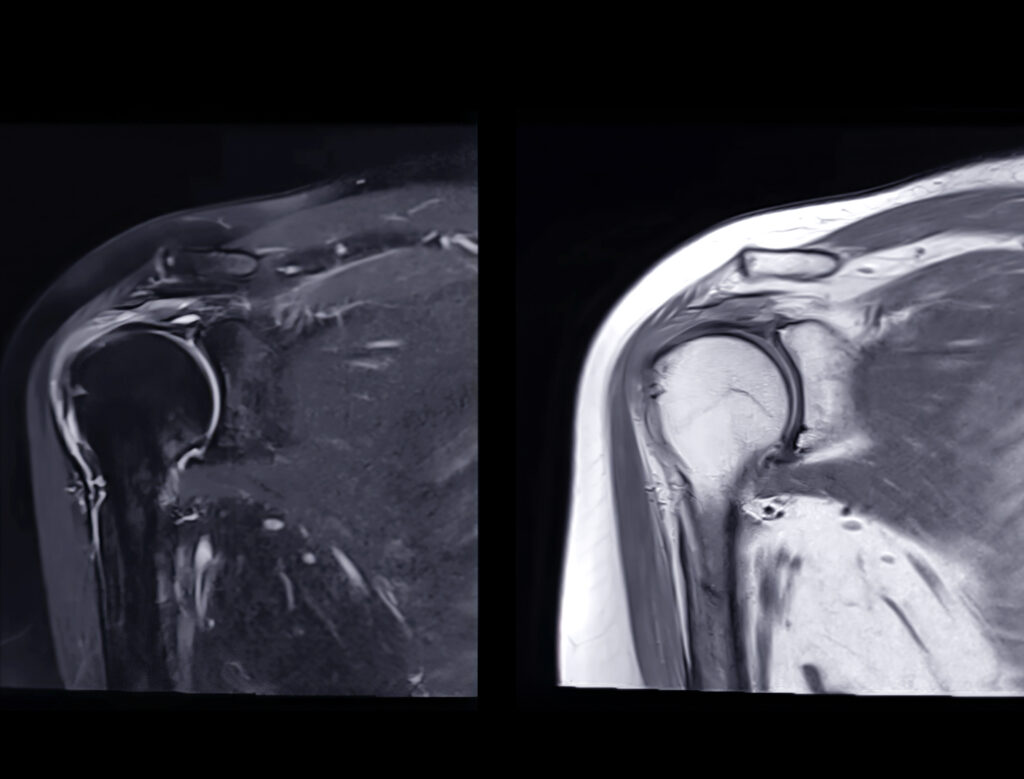
MRI of Shoulder Joint

Is MFAT right for you?

We’ll review your history, imaging, goals, and prior treatments to determine whether MFAT is the most appropriate procedure for your condition.

The Science Behind Our Treatments.

What to know more about our evidence based approach? Explore the links below for more information.

Study 1

Study comparing long-term outcomes (up to 1.8 years) comparing bone marrow concentrate vs microfragmented adipose tissue injections for knee osteoarthritis.

Study 2

Study looking at efficacy of MFAT, BMC, PRP and hyaluronic acid for treatment of knee osteoarthritis.

MFAT preparation
shoulder / elbow exam

Study 3

A case report demonstrating that combination MFAT and PRP therapy successfully achieved clinical and radiographic healing of a partial-thickness supraspinatus tear.

Study 4

The Orthobiologics Research Initiative is conducting a 12-month clinical trial to determine if Micro-Fragmented Adipose Tissue (MFAT) injections can safely repair partial rotator cuff tears.

MRI of Shoulder Joint

Get Back to What You Love

Schedule a consultation to explore non-surgical treatment options that align with your active lifestyle.